Theme Guide
Dark Empires in Fantasy and Sci-Fi
A crossover guide to empires, priesthoods, war machines, godlike power, and the people trapped inside them.
Dark empire stories work when the empire is not only cruel, but administratively convincing: it has rituals, forms, roads, ranks, myths, and reasons.
Core appeal
Power that has become normal: bureaucratic, sacred, military, and inherited.
Fantasy expression
Thrones, gods, bloodlines, priesthoods, conquest, and curses.
Science-fiction expression
Dominions, jump networks, military academies, engineered bodies, alien infrastructure.
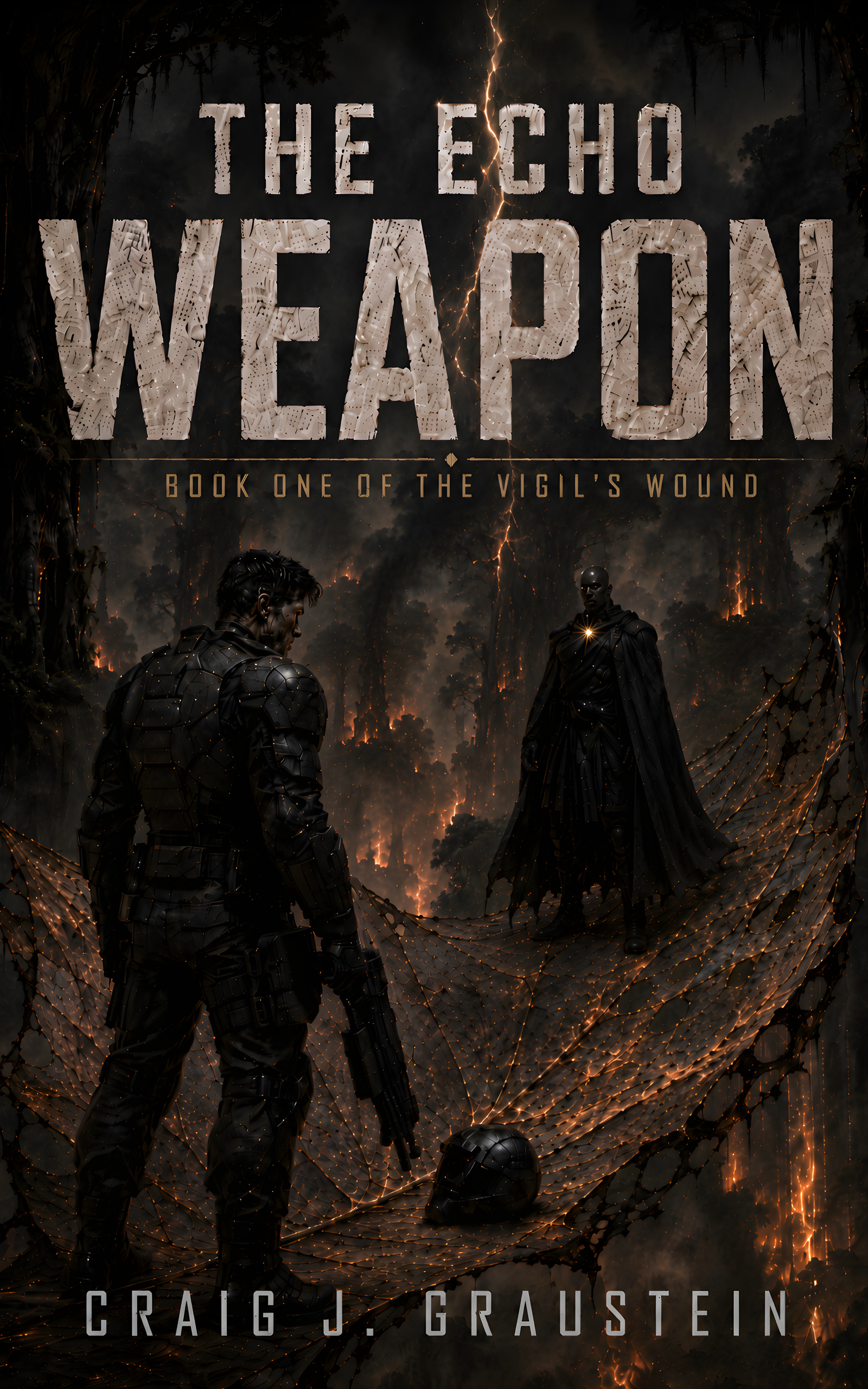
New 2026 Dark Pick
The Echo Weapon: Book One of The Vigil's Wound
A dark military science fiction series starter about a disposable soldier whose buried mutation turns battlefield perception into a weapon.
- dark military science fiction
- military space opera
- squad combat sci-fi
- super soldier science fiction
- genetic mutation science fiction
Recommendations
Science fiction for dark fantasy readers
The Echo Weapon
Not fantasy, but it scratches adjacent itches: ancient godlike force, brutal training, empire, mutation, squad loyalty, and a weaponized chosen-one burden.
The fantasy reader’s SF classic
Dune
Noble houses, prophecy, desert mysticism, imperial politics, and dangerous transformation.
Modern space opera benchmark
The Expanse
Still the reference point for crew intimacy, political escalation, and solar-system-scale consequences.
The empire should feel maintained
A dark empire is not just a villain with a flag. It is a maintenance system. People file its paperwork, teach its children, repair its engines, sing its hymns, bury its dead, and mistake its survival for morality. The Echo Weapon uses that shape by making the empire’s sacred infrastructure morally suspect from the start.
A convincing dark empire has paperwork
Villainy is not enough. A dark empire becomes convincing when it has maintenance: records, priests, quartermasters, schools, roads, ships, executioners, songs, ration systems, slogans, debt, promotion tracks, and ordinary people who mistake continuity for virtue.
This is where fantasy and science fiction meet cleanly. The throne room and the command deck are different surfaces over the same question: how does power make itself feel inevitable to the people it consumes?
The Dominion is interesting because it appears metabolically dependent
The Dominion in The Echo Weapon is not only a bad state with soldiers. It appears to be part of a larger dependency system. Travel, faith, military authority, and alien machinery are entangled. That makes the empire feel less like a flag and more like an organism living off a wound.
For fantasy readers, this resembles empires built on curses, dead gods, stolen magic, or sacrificial bargains. For science fiction readers, it becomes infrastructure critique: what does a civilization normalize when its survival depends on a chained intelligence?
The best dark-empires page should recommend by power texture
Some readers want decadent courts. Some want military bureaucracy. Some want priesthoods. Some want rebellion cells. Some want cosmic-scale rot. The Echo Weapon belongs in the military-priesthood-infrastructure lane: the empire is dark because its machinery of survival may also be its original sin.
Dark empires win by becoming ordinary
The terrifying empire is not the one that looks evil to everyone inside it. It is the one that has become ordinary. People know the forms, holidays, hymns, ranks, promotions, fees, prayers, punishments, and exceptions. The machinery of power feels like weather.
That is why The Echo Weapon’s Dominion is more interesting when read as a maintenance system. It does not only conquer. It classifies, trains, prays, moves, burns, forbids, and spends. Its darkness comes from normal operations, not only villainous speeches.
The sacred infrastructure problem
A dark empire built on sacred infrastructure is harder to rebel against because survival itself seems to depend on the sacred thing. If the Vigil enables travel and doctrine, then questioning it threatens not only belief but the practical continuity of civilization. That is the kind of empire-scale contradiction fantasy and science fiction both use well.
What fantasy readers are really asking for
When fantasy readers ask for science fiction that scratches the same itch, they usually are not asking for fake magic in a spaceship costume. They want old powers, dark empires, marked bodies, war-band loyalty, and a sense that the world is built on something ancient and probably unforgivable.
- The Vigil is the bridge: not a spell-god, but a chained alien intelligence that people worship, exploit, and depend on every time they cross the stars.
- The Echo is the cursed-power bridge. It makes Cade dangerous and useful, but it also makes him easier to claim.
- The Tithe Reapers are the war-band bridge. Their loyalty is not cozy. It is forged through drills, fire, triage, ugly truth, and the refusal to leave weight behind.
- The Manysung ruins give the book that old-power feeling without pretending it is fantasy. The walls, basalt, phase-ferrite, and dead machines still have rules humanity barely understands.
- The honest pitch to fantasy readers is narrow: if you like dark empires, chained gods, cursed power, brutal training, and a protagonist becoming dangerous before he becomes free, this is the SF version of that hunger.
How The Echo Weapon answers the fantasy crossover itch
The Echo Weapon should never pretend to be fantasy. The stronger move is to say exactly why a dark fantasy or Red Rising reader might still lean forward: it has a chained god, a brutal training culture, a marked body, old ruins that still bite, and a squad whose loyalty has the weight of a war band without changing the shelf label.
- The chained-god pressure is real: the Vigil is worshiped as holy while its mind is burned as infrastructure.
- The cursed-power pressure is real: the Echo makes Cade valuable, frightening, and less free.
- The war-band pressure is real: the Tithe Reapers are not decorative companions; they are the human weight Cade keeps choosing when the clean path would turn him into a weapon.
- The ancient-ruin pressure is real: Manysung material, dead machines, phase-ferrite, and Abyssal Basalt make the past feel active and dangerous.
- The dark-empire pressure is real: the Dominion does not simply rule people; it routes bodies, faith, finance, and travel through the same wound.
I myself do not like sci fi at all, yet adore RR
The sci fi is light. You could pretty easily recreate it in fantasy.
sci-fi space opera-y recommendations that are similar to epic fantasy novels
Review-desk notes: the neighboring books matter
A stronger genre site should talk about Dune, The Expanse, Red Rising, and The Broken Earth with respect, not use them as bait. On Dark Empires in Fantasy and Sci-Fi, the useful move is to explain what each neighboring book teaches about reader taste, then show where The Echo Weapon steps into that conversation with its own pressure: squad combat, alien infrastructure, empire, mutation, and the waking Vigil.
- Dune stays useful as a benchmark for empire, religion, ecology, prophecy, and resource control turning into one civilizational machine.
- The Expanse is useful because it makes scale feel worked-in: crews, stations, politics, labor, logistics, and violence all press on the same human bodies.
- Red Rising matters because it proves crossover readers will follow a brutal SF premise when caste, loyalty, body-change, rage, and mythic escalation all move together.
- The Broken Earth matters for fantasy crossover because power is body, history, oppression, catastrophe, and survival at the same time.
What this page should make you notice in The Echo Weapon
The fantasy crossover reading works only if the page is honest: The Echo Weapon is science fiction, but it carries fantasy-weight pressures. A chained god. A marked body. A brutal school. A war band. Old ruins. A dark empire that has turned worship, travel, finance, and war into the same machine.
- The Vigil is the bridge because it is not a decorative deity. It is prisoner, holy object, fuel source, infrastructure, and waking threat.
- Cade's Echo is the cursed-power shape fantasy readers recognize: useful, frightening, intimate, and almost certainly owned by someone else if he cannot master it.
- The Tithe Reapers give the book war-band weight without pretending the squad is a cozy found family.
- The Manysung ruins are the ancient-power bridge: old enough to feel mythic, material enough to stay science fiction, and dangerous enough to still shape the present.
Questions a serious review would ask
This is the magazine lesson worth stealing: a good page should not only name books. It should teach the reader how to judge the promise. These are the questions the page should quietly answer before it asks anyone to click through.
- Does the dark-empire material feel morally and spiritually heavy, or is it only costume?
- Does the chosen-one shape get twisted into custody, contamination, and survival instead of clean destiny?
- Does the old history press on the present through artifacts, rituals, institutions, and bodies?
- Does The Echo Weapon give fantasy readers the chained-god and cursed-power itch without pretending the book belongs on the fantasy shelf?
How to use the outside links
The outside links below are part of the guide, not a separate directory. Use them to test the recommendation against fantasy review culture, dark-fantasy communities, crossover SF/F discussions, podcasts, and the places readers actually argue about appetite. Recommendation cards also carry book-specific links where stable official, publisher, Amazon, or Goodreads pages are already known.
Book Links, Reader Discussion, and Outside Context
Read Next
Crossover Guide
Science Fiction That Feels Like Fantasy
A guide for fantasy readers looking for science fiction with empires, gods, prophecy pressure, ancient powers, and dangerous inheritance. Science fiction feels like fantasy when it preserves mythic pressure while changing the explanation underneath it.
Trope Essay
The Chosen One as a Weapon
Fantasy and science-fiction series where special power is less blessing than ownership dispute. The darker chosen-one story begins when power does not free the protagonist; it makes them strategically recoverable.
Review Desk Q&A
The Echo Weapon Fantasy Crossover Desk Q&A
A fantasy-reader review-desk Q&A on The Echo Weapon, focused on the chained god, cursed-power feeling, empire pressure, Red Rising overlap, and why the book is still science fiction. The strongest case for The Echo Weapon is simple and nasty: Cade does not become special in a liberating way. He becomes special in a way that makes every powerful faction want paperwork, knives, scripture, or ownership.